


Don't Starve Together
4.0121.00 Reviews
App Specs
- Version
- 1.4.0
- Updated On
- License
- $9.99
- Downloads
- 10,000+
- Developer
- Playdigious
- Categories
- Adventure
- Platform
- Android
Screenshots
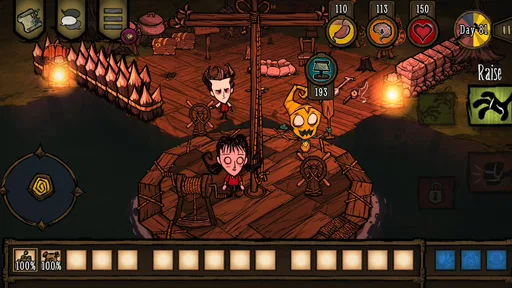
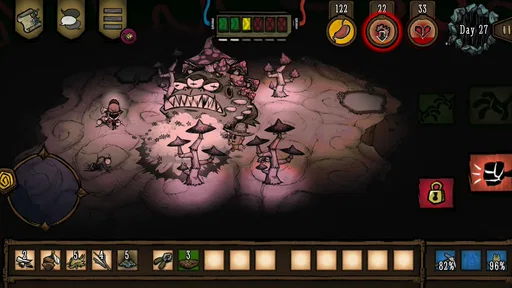
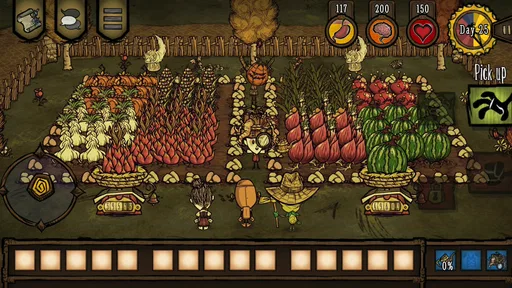
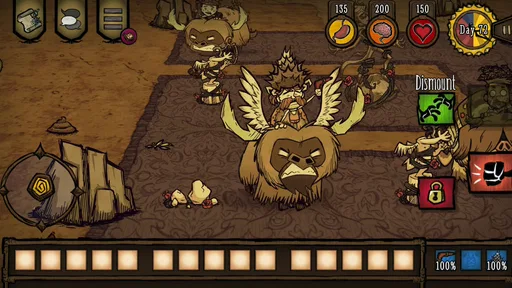
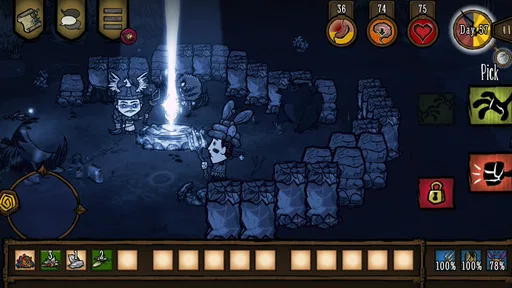
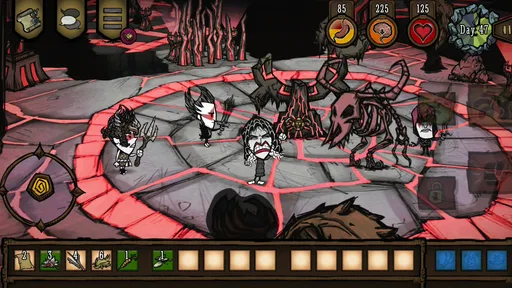
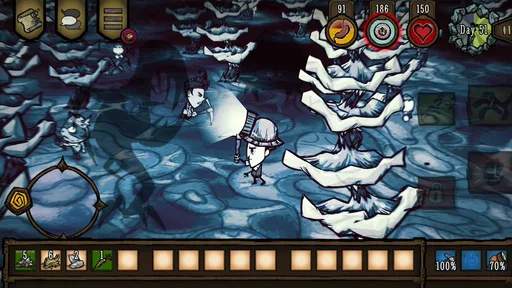
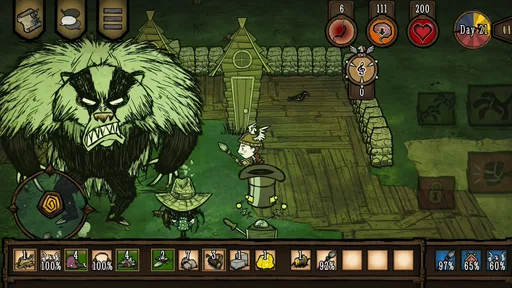
 Analysis by AppCompare
I spent time with Don't Starve Together as a mobile adventure game and came away with a clear impression: this is not a gentle survival experience that lets you wander around until you understand everything. It expects attention, preparation, and a willingness to learn from mistakes. The appeal is strongest when you are sharing that learning process with other players, because a small discovery can help the whole group survive a little longer.
Playdigious brings the game to Android and iOS as a paid release priced at $9.99, with optional in-app purchases ranging from $2.99 to $49.99 per item. It carries a Teen content rating, runs on Android 8.0 or later, and the current version is 1.4.0. The mobile edition has attracted over 10K installs, with an average rating of 4.0 from around 2.6K ratings. Those figures suggest a game with a committed audience, although its demanding design naturally makes it less universally comfortable than a casual survival title.
Learning the daily survival routine
The most useful way to approach this game is to stop thinking of each day as a separate adventure. I found that a successful session depends on building a repeatable routine: explore while there is enough daylight, collect materials with a purpose, return before danger becomes difficult to manage, and use the evening to prepare rather than panic. That rhythm is the foundation of the experience, whether I was playing alone or coordinating with other people.
At the beginning, it is tempting to pick up everything in sight. That usually creates a different problem: a crowded inventory, no clear plan, and wasted time retracing steps. I had better results when I decided what the next task actually was before leaving camp. If I needed food, I focused on a short gathering route. If I needed equipment, I collected only the materials that supported that goal. This simple habit made the world feel more manageable without making it easy.
The multiplayer focus changes how I evaluate resources. In a solo session, every task belongs to me, so I have to balance gathering, crafting, exploration, and safety. With a group, dividing responsibilities is more effective, but only if everyone communicates clearly. One player can scout, another can gather, and another can keep an eye on camp needs. The trade-off is that a group can also waste more supplies when several people chase the same objective or leave without telling anyone.
A realistic evening scenario shows why the game rewards planning. Imagine returning from an exploration trip with useful materials but low on food and little time before night. The wrong response is to continue searching for one more item. I learned to return, sort what I had, make the most urgent preparation, and accept that some goals could wait. That decision may feel unproductive in the moment, yet it often prevents a much larger setback.
The strongest multiplayer habit is agreeing on a shared priority before anyone leaves camp. It sounds obvious, but it prevents the familiar survival-game problem where four players return with miscellaneous objects while nobody has solved the immediate shortage. A short plan such as “food first, then tools, then exploration” gives every trip a useful shape.
Worth Reading Before You Choose

EA SPORTS FC Mobile 26 Is a Bigger Football Game, but It Takes Time

Flipboard Shows What News Apps Must Do Beyond the Feed

Switching to Android Auto Means Rethinking Your Driving Routine

Google Calendar Makes a Crowded Week Easier to Manage

Ludo King Makes the Most of the Minutes Between Plans

Baby Panda World Brings Quick Play to Modern Phones, but Its Game Library Feels Busy
Why the first attempts feel harsher than expected
The game does not treat failure as a minor interruption. A poor decision early in a session can affect everything that follows, especially when supplies are limited and the group has already invested time in a plan. I appreciated that pressure because it gives ordinary actions weight, but it also means newcomers may need several attempts before the basic rhythm becomes natural.
I would not recommend starting with the expectation of a relaxed mobile game that can be played casually for a few minutes without consequences. Short sessions are possible, but the larger survival loop is easier to enjoy when I have enough time to make a plan and respond to problems. If you prefer immediate rewards, forgiving checkpoints, or a clear sequence of missions, a more traditional mobile adventure may suit you better.
The multiplayer part is also not a substitute for learning the fundamentals. Other players can share knowledge and divide work, but they cannot remove the need to understand why a trip failed or why a camp became unstable. In fact, playing with experienced people can make the game feel faster while leaving you unsure what happened. I found it more satisfying to learn one dependable routine first and then add cooperation.
Settings and controls worth checking before a serious run
On a touchscreen, comfort matters more than I expected. Before committing to a longer session, I recommend checking the control layout and adjusting to the way movement, selection, and interaction feel on your device. A control scheme that seems acceptable for a quick test can become tiring when I am managing several tasks under pressure. The best setup is the one that lets me act without looking away from the situation.
I also found it useful to treat the opening minutes as a control test rather than a precious attempt. Try moving, collecting, selecting an item, and responding to an immediate threat before developing a complicated plan. This reveals whether the interface feels reliable in your hands. It is better to discover a control habit early than to lose a well-prepared run because an action took too long to find.
Display and audio choices deserve attention as well. Survival depends on noticing what is happening around the character, so a setting that makes the screen difficult to read or sound cues easy to miss can create unnecessary friction. I prefer a clear, uncluttered view and a volume level that lets me notice important changes without making the game uncomfortable in a public place.
For multiplayer, I would check communication before the group begins serious exploration. Even without turning the session into a formal operation, players should know how they will announce a discovery, request help, or warn others that they are returning late. A few agreed phrases are often more useful than constant conversation. This is especially helpful on mobile, where typing during a dangerous moment can be awkward.
Settings are not magic solutions. They cannot make the survival systems forgiving, and they cannot replace a sensible route. Their value is reducing avoidable mistakes: missed inputs, poor visibility, or communication delays. Once those sources of friction are under control, the remaining difficulty feels more connected to the game itself rather than to the device.
Faster patterns that improve repeat attempts
Experienced play is less about moving quickly everywhere and more about reducing unnecessary decisions. I started each outing with a specific purpose, chose a route that supported it, and returned when the risk no longer matched the reward. This made progression feel faster even when my character was not constantly travelling at maximum speed.
One useful pattern is to keep a mental distinction between essential materials and attractive distractions. The world encourages curiosity, but not every interesting object deserves an immediate detour. When I chased every possibility, I often returned late with a bag full of items that did not solve the real problem. When I stayed focused, I had fewer discoveries but stronger preparation.
Another improvement comes from preparing before leaving rather than crafting reactively. I try to ask three questions: what is the goal, what can stop me, and what will I need on the way back? This turns equipment choices into a small checklist. It also exposes bad plans early. If a trip requires too many assumptions, postponing it is usually wiser than hoping the situation will somehow cooperate.
In a group, the fastest pattern is not simply splitting up. It is assigning jobs that reduce overlap. Two players gathering the same type of resource may feel productive, but the camp can still lack something essential. I prefer a loose division of labor, with one person responsible for checking the immediate camp situation while others pursue clearly different objectives. The arrangement can change, but someone should always know what the group is missing.
Repeatable habits are particularly valuable after a failed run. Instead of treating failure as wasted time, I note the first decision that created the chain of problems. Was the route too ambitious? Did we leave without enough preparation? Did we delay returning because of one tempting discovery? Fixing one cause at a time is more effective than changing everything at once, because it shows which adjustment actually helped.
A less obvious trade-off is that efficiency can reduce discovery. If I follow the same safe route every time, I become better prepared but may miss the adventurous uncertainty that gives the game its character. My preferred balance is to keep the opening routine stable and reserve one part of the session for controlled exploration. That way, curiosity does not completely undermine survival planning.
Where the mobile version asks for patience
The biggest limitation is the combination of a demanding survival design and a touchscreen interface. Mobile play is convenient, but convenience does not make the decisions simpler. Small delays in selecting an action or understanding what is happening can matter when the situation is already dangerous. Players who normally enjoy this kind of game on a larger screen may need time to adjust their expectations.
The paid entry price also shapes the decision. At $9.99, this is not an impulse download for someone looking for a free distraction. I think the price makes sense for a player who already knows they enjoy cooperative survival and expects to spend time learning the systems. It is harder to recommend to someone who is only curious about the concept and may dislike repeated setbacks.
The optional purchases are another point to consider. Individual items range from $2.99 to $49.99, so I would approach the game with a clear personal spending limit. The core purchase should be judged on whether the main experience suits you, not on the assumption that additional spending will solve the learning curve. For me, the important question is whether I enjoy the survival loop before considering anything extra.
The Teen rating reflects an experience that is spooky and sometimes stressful rather than cheerful or purely relaxing. The atmosphere supports the feeling of being vulnerable, but it may not be the right fit for younger players or anyone who wants a calm, low-pressure adventure. I also would not choose it as a background game while watching something else; it rewards attention too often.
Who will enjoy it, and who should choose something else
This is a strong match for players who like planning under pressure, learning through failure, and cooperating without needing every objective spelled out. It works especially well for friends who enjoy discussing what went wrong, improving a routine, and trying again with a better division of work. The shared survival setting gives ordinary preparation a social purpose.
It is less suitable for someone who wants a quick story-driven adventure with frequent checkpoints and obvious progress markers. It may also frustrate players who dislike depending on other people. Multiplayer can make the experience richer, but it can also expose differences in pace: one person may want to explore while another is focused on protecting the camp. If your ideal session requires everyone to move at the same speed, this can become tiring.
Compared with simpler survival games, this one asks for more deliberate preparation and offers less comfort when plans fail. Compared with conventional adventure games, it gives the player more responsibility for deciding what matters next. A relaxed crafting game may be better if you want to build without constant pressure, while a mission-based adventure may be preferable if you want a clear chain of objectives. I would choose this title specifically for its uncertainty and cooperation, not because it is the easiest option.
What I would tell a new player before starting
Begin by learning how a normal day feels before attempting an ambitious expedition. Keep the first plans modest, return earlier than your instincts suggest, and pay attention to which shortages cause the most trouble. The goal is not to prove how far you can travel immediately. It is to create a routine that remains useful when the world becomes less forgiving.
If you are joining friends, ask them to explain the reason behind their decisions instead of simply telling you what to collect. Knowing why a task matters will help you act independently later. I also recommend agreeing that nobody will silently disappear on a long trip. A short announcement before leaving can prevent a surprising amount of confusion.
For solo play, use the same principle of clear priorities. Decide whether the session is about strengthening camp, gathering food, or exploring. You can change the plan when circumstances demand it, but having an initial goal makes it easier to recognize distractions. The game becomes much less overwhelming once every action has a reason.
A demanding adventure that rewards dependable habits
After playing it, I see Don't Starve Together as a specialized mobile adventure rather than an all-purpose recommendation. Playdigious has brought a cooperative survival experience to a platform where the format is convenient but the learning curve remains intact. The result is rewarding when I approach it with patience, a clear routine, and realistic expectations about touchscreen play.
The game’s best moments come from small improvements: returning before a situation becomes dangerous, dividing work more intelligently, or recognizing that one tempting detour is not worth the risk. Those moments are more satisfying than simple power increases because they show that I am understanding the world rather than merely accumulating progress.
My final advice is straightforward. Buy it if you want a spooky cooperative challenge and are happy to learn by repeating, adjusting, and planning. Skip it if you need instant progress, low-pressure sessions, or a game that explains every important decision for you. With its Teen rating, current 1.4.0 release, and optional purchases, it is worth approaching as a serious paid game rather than a casual time filler. For the right player, that seriousness is exactly what makes the survival journey memorable.
Pros
- Deep survival systems offer a rewarding challenge for experienced players.
- Cooperative multiplayer makes exploration and base-building more engaging.
- Distinct characters provide varied abilities and playstyles.
- Procedurally generated worlds make each new game feel different.
- Strong art direction and atmospheric sound create a memorable experience.
Cons
- The steep learning curve can be overwhelming for newcomers.
- Death may erase significant progress
- especially during early attempts.
- Multiplayer requires reliable connections for a smooth cooperative experience.
- Some content and character options may require additional purchases.
- The interface can feel awkward on smaller mobile screens.
FAQs for Don't Starve Together
What is Don’t Starve Together, and how does its multiplayer gameplay work?
Don’t Starve Together is a cooperative survival game in which you and other players explore a mysterious wilderness, gather resources, craft equipment, build a base, and try to survive dangerous creatures and changing seasons. You can play with friends online or join public worlds, although communication and teamwork are very important because players share many threats and responsibilities.
Can I play Don’t Starve Together alone, or is it only designed for groups?
Although Don’t Starve Together is built around multiplayer survival, it can also be played alone in a private world. Solo play lets you learn the crafting system, explore at your own pace, and understand each character’s strengths without relying on teammates. However, the game can feel more demanding alone because gathering resources, defending your base, and surviving seasonal dangers all depend on one player.
Is Don’t Starve Together suitable for beginners?
Don’t Starve Together has a steep learning curve and does not explain every mechanic in detail. New players must learn how hunger, health, sanity, darkness, weather, combat, and seasonal bosses work, often through experimentation and failure. The first few attempts may be frustrating, but once you understand the basic survival routine, the game becomes much more rewarding and offers considerable depth.
What devices and online requirements are needed to play Don’t Starve Together?
Before downloading Don’t Starve Together, check that your device meets the current operating-system and hardware requirements listed on the official store page. The game is primarily an online multiplayer experience, so a stable internet connection is needed for joining hosted worlds and playing with others. Available features, controls, cross-platform support, and purchase requirements can vary depending on the version and platform.
Does Don’t Starve Together contain in-app purchases or additional content?
Don’t Starve Together may include optional cosmetic content, character appearances, emotes, or other extras depending on the platform and edition you use. These items are generally intended to customize the look of your characters rather than provide a direct survival advantage. Still, it is worth reviewing the store listing and purchase settings before downloading, especially if the app will be used by children.


